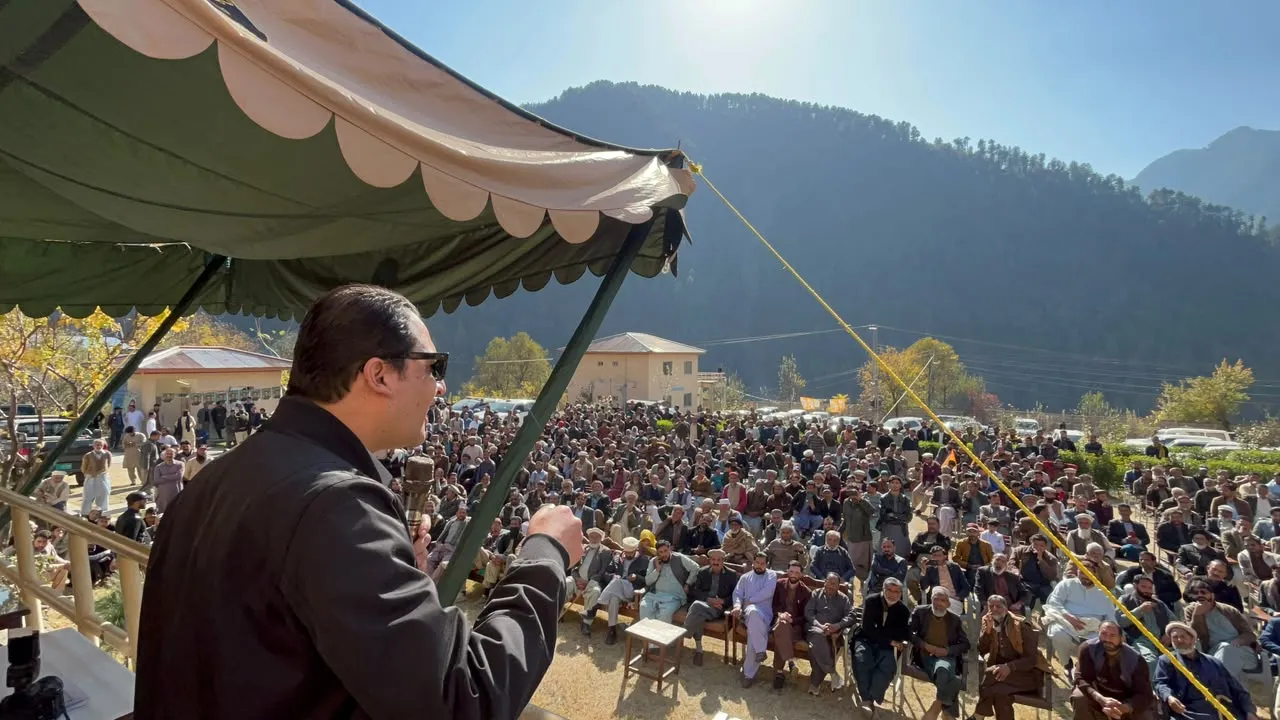
MUZAFFARABAD: Pakistan Muslim League-Nawaz (PML-N) President Nawaz Sharif is scheduled to visit Muzaffarabad on November 18, with reports also pointing to a visit to Neelum Valley. The visit comes at an important moment for Azad Jammu and Kashmir (AJK), as the newly formed government of Prime Minister Syed Iftikhar Ali Gillani prepares to launch its much-anticipated 100-day development and reform agenda.
According to media reports, Nawaz Sharif will meet the party's parliamentary group, legislators, party leaders and other representatives. Discussions are expected to include government affairs and the proposed 100-day programme. Although the precise nature of the visit and its complete schedule have not been officially detailed, its timing has drawn considerable attention.
The 100-Day Agenda: What We Know So Far
Formed on August 28, 2026, following the general elections, the Gillani-led government has presented its 100-day agenda as an important roadmap for governance and public service delivery.
The initiative has its roots in the August 31 meeting at Jati Umra, where Nawaz Sharif handed the newly elected prime minister a comprehensive reform agenda. Prime Minister Shehbaz Sharif, Punjab Chief Minister Maryam Nawaz and AJK Assembly Speaker Tariq Farooq were also present.
Nawaz Sharif emphasised improvements in healthcare, education, sanitation and infrastructure, particularly in remote areas. He also called for employment opportunities, skills development and better educational facilities for young people. He stressed that progress should be regularly monitored and that electoral commitments must translate into tangible improvements in people's lives.
Since then, several initiatives have emerged as components of the government's proposed programme.
These include the Suthra Kashmir initiative, Clinic on Wheels, public transport improvements, the Honhaar Scholarship Programme, Himmat Card, Dhee Rani Programme and digitalisation of government services.
Healthcare is another significant component. According to reports following the October cabinet meeting, the government plans to upgrade two basic health units and one rural health centre in every district. Cardiac catheterisation laboratories are also proposed for Bhimber, Kotli and Rawalakot, alongside two stroke centres across the region.
The Punjab Information Technology Board has also been involved in developing AJK's digital transformation roadmap. Nineteen digital initiatives have been identified for pilot implementation, including an integrated government service delivery model called AJK One.
Further details, timelines and implementation arrangements are expected to become clearer with the formal launch.
The Real Test Begins With Implementation
AJK has no shortage of development challenges. Improving public transport, healthcare, education, tourism infrastructure and municipal services requires more than announcing new projects.
The proposed digital transformation, for instance, will remain limited without reliable internet connectivity across the region. Similarly, a successful Suthra Kashmir programme needs an effective waste collection, transportation and processing system. Collecting waste without establishing proper disposal and recycling arrangements will not solve the underlying problem.
Tourism development requires better roads, reliable public facilities, improved services and digital infrastructure. These are interconnected challenges that demand coordinated planning.
The 100-day agenda is therefore more than another government development programme. It is the first major performance test for Prime Minister Iftikhar Gillani and his administration.
The new government has political backing and an opportunity to pursue an ambitious reform programme. What it needs now is a capable implementation team, clear targets, institutional coordination and transparent accountability.
The people of AJK have heard many development promises over the years. This time, they will be looking for measurable results.
The success of the next 100 days will depend not on the number of initiatives announced, but on how many actually reach the people.