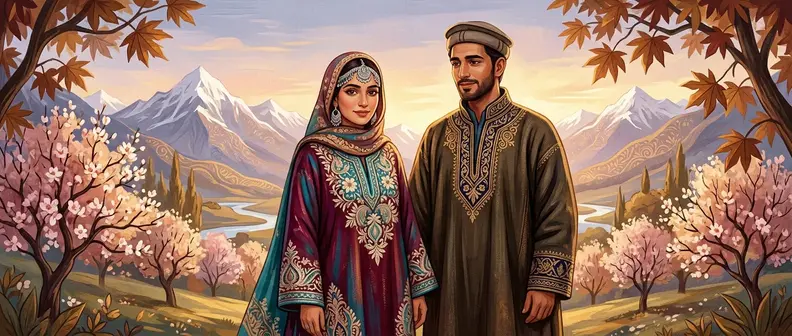
From cold winter mornings to family gatherings and festive occasions, the pheran remains one of Kashmir's most recognisable garments. Combining warmth, comfort and intricate craftsmanship, it is a traditional piece of clothing that continues to hold a place in everyday life and the region's cultural heritage.
Shaped by Kashmir's cold winters and mountainous landscape, the pheran is a loose-fitting outer garment designed to accommodate layers of clothing beneath it. Its flowing silhouette, generous sleeves and varied decorative styles have made it a distinctive feature of Kashmiri dress.
Over generations, the garment has evolved from a practical winter necessity into an expression of regional craftsmanship and personal style. Plain woollen pherans remain popular for everyday wear, while embroidered versions bring colour and intricate detail to weddings, celebrations and other special occasions.
Although its design varies across communities and generations, the pheran retains its essential character: comfortable, adaptable and deeply rooted in Kashmiri life.
A History Shaped by Kashmir's Climate
The pheran's history is closely associated with the demands of winter in Kashmir, where temperatures can fall considerably, particularly in mountainous areas. People needed clothing that provided warmth without restricting movement, whether they were working outdoors, travelling between villages or carrying out household activities.
The pheran offered a practical solution. Its loose construction allowed people to wear additional layers underneath, while its length provided coverage against the cold. The garment became established in Kashmiri dress across different social backgrounds and in both rural and urban communities.
Over time, variations emerged in fabric, colour, length and decoration. Some garments remained simple and functional, while others incorporated elaborate embroidery and finer materials.
Kashmir's long history of cultural exchange also contributed to the development of its clothing and textile traditions. However, the precise origins of the pheran remain difficult to establish, and its history is best understood as an evolution of regional dress rather than an invention attributable to a single person or period.
Today, the garment connects generations through familiar winter routines and family traditions, even as contemporary designers introduce new cuts, colours and styles.
How Is a Pheran Made?
The making of a pheran involves selecting suitable fabric, cutting and stitching the garment, and, where required, adding decorative embroidery. The process varies according to the intended use, the complexity of the design and the skills of the people involved.
Fabric Selection
Fabric determines much of a pheran's warmth, appearance and suitability for different occasions.
Wool is a traditional choice for winter garments because of its insulating properties. Cotton and lighter fabrics are used for less demanding weather conditions, while velvet and other decorative materials feature in dressier designs. Wool blends and synthetic fabrics are also available in contemporary markets.
The choice depends on whether the garment is intended for everyday wear, outdoor use or special occasions.
Cutting and Stitching
A traditional pheran has a relatively loose silhouette, broad sleeves and enough room for comfortable movement. The tailor cuts the fabric according to the desired length and fit before stitching the pieces together.
Traditional versions may extend towards the ankles, while many contemporary designs finish around or below the knees. Some retain a straight, flowing shape, while others feature modified shoulders, collars or side slits.
Despite these variations, comfort and freedom of movement remain central to the garment's design.
The Art of Embroidery
Embroidery gives many pherans their distinctive appearance. Decorative work is often concentrated around the neckline, chest, cuffs and hem, although some garments feature patterns across much larger areas.
Floral designs, leaves and curling vines are common motifs in Kashmiri textile traditions. Their intricate arrangements reflect the skills of artisans who work with different stitches, threads and patterns.
Hand embroidery can require considerable time and precision, particularly when the design is elaborate. The quality of the work, the materials used and the complexity of the pattern all influence the finished garment.
Not every embroidered pheran is entirely handmade. Machine stitching and commercially produced decoration are also common, offering buyers a wider range of designs and prices.
Types of Kashmiri Pheran
The pheran is not a single standardised garment. Its different forms reflect variations in fabric, embroidery, intended use and changing fashion preferences.
1. Traditional Woollen Pheran
The woollen pheran remains closely associated with everyday winter life in Kashmir. Usually simple in design, it provides warmth while allowing the wearer to move comfortably.
Men's versions often feature understated colours such as grey, brown and black, while women's woollen pherans range from plain designs to garments with modest decorative details.
These practical garments remain suitable for daily activities, whether worn at home, at work or outdoors during winter.
2. Embroidered Pheran
Embroidered pherans combine traditional clothing with decorative craftsmanship. The embroidery may be limited to the neckline and sleeves or extend across much of the garment.
Floral patterns and other motifs associated with Kashmiri textiles are common, with the final appearance depending on the fabric, colour and amount of decorative work.
Some embroidered pherans are designed for everyday wear, while more elaborate versions are chosen for social gatherings and celebrations.
3. Tilla Pheran
Tilla embroidery is a distinctive feature of elaborate Kashmiri dress. It uses metallic-coloured threads, traditionally in gold or silver tones, to create decorative patterns on fabric.
A tilla pheran often features embroidery around the neckline, chest and sleeves, where the metallic thread contrasts with the base material.
These garments are particularly associated with formal occasions, weddings and celebrations. The complexity of the design and the quality of the embroidery can vary considerably, from restrained detailing to extensive decorative work.
4. Aari-Work Pheran
Aari embroidery is produced using a hooked needle that creates a characteristic chain stitch. The technique allows artisans to develop flowing floral patterns, leaves and intricate arrangements.
Used across Kashmiri textiles, including clothing and shawls, aari work gives pherans a distinctive decorative finish. The designs range from relatively simple motifs to elaborate patterns covering substantial areas of fabric.
5. Sozni-Work Pheran
Sozni is a fine needle-embroidery tradition particularly renowned for its detailed work on Kashmiri shawls.
The technique is associated with delicate stitching and carefully executed patterns, often featuring flowers, leaves and other ornamental forms. Its intricate character distinguishes it from more prominent decorative styles.
Although best known for shawls, sozni-style needlework can also be incorporated into garments. On a pheran, it offers a refined finish that relies on the precision of the stitching rather than the metallic appearance of tilla embroidery.
6. Contemporary and Designer Pherans
Modern pherans reflect changing preferences in clothing and everyday lifestyles. Designers and manufacturers have introduced shorter lengths, varied collars, lighter fabrics and more fitted silhouettes.
Colour choices have expanded beyond traditional dark and earthy shades to include pastels, brighter tones and contrasting embroidery. Some designs retain the traditional flowing shape, while others are styled to complement jeans, trousers and other contemporary clothing.
These adaptations have helped introduce the pheran to younger generations and people beyond Kashmir.
Modernisation does not necessarily mean abandoning tradition. A garment can retain the recognisable silhouette of a pheran while accommodating different tastes, materials and ways of dressing.
The Pheran and the Kangri: A Traditional Winter Combination
The pheran is closely associated with another familiar feature of Kashmiri winter life: the kangri.
A kangri is a portable heating vessel consisting of an earthen pot held inside a woven basket. Traditionally filled with hot embers, it provides personal warmth during cold weather.
For generations, Kashmiris have worn the pheran while using a kangri beneath its loose outer layer. The combination became part of everyday winter routines in homes, shops and other settings where modern heating was unavailable.
It reflects the practical ways in which people adapted clothing and household objects to the demands of their environment.
The practice also carries safety risks. Hot embers can cause serious burns or ignite clothing, so a kangri requires careful handling.
Today, people continue to wear pherans with or without a kangri. The garment's usefulness extends well beyond this traditional combination, making it relevant to changing living arrangements and modern winter wardrobes.
Who Wears the Pheran?
Traditionally worn by both men and women, the pheran comes in a wide range of designs suited to different preferences and occasions.
Men's pherans are often relatively simple, with plain fabrics and restrained decoration. Woollen versions remain popular for everyday winter wear and may be paired with traditional trousers, a shalwar or contemporary clothing.
Women's pherans range from plain woollen garments to richly embroidered designs. Tilla, aari and other decorative techniques feature in more elaborate versions, which are worn for everyday activities as well as weddings, family gatherings and festive occasions.
Children's pherans follow the same basic design, prioritising warmth and comfortable movement. Brighter colours and simpler decorative details are common in contemporary versions.
Across these variations, the garment's loose fit makes it adaptable to different ages, preferences and routines.
The Pheran in Everyday Life Today
The pheran remains a recognisable part of Kashmiri winter clothing, although the frequency and style of its use vary between individuals, communities and generations.
For some, it is an everyday necessity. For others, it is associated with family traditions, cultural gatherings or particular occasions. Its appeal lies partly in its versatility: a plain woollen pheran can provide warmth during ordinary winter days, while an embroidered version can be worn at a celebration.
The garment has also attracted interest beyond Kashmir, particularly among people drawn to traditional textiles, regional craftsmanship and relaxed silhouettes.
Its continued presence reflects the ability of traditional clothing to adapt without losing its identity. Contemporary designs offer new ways to wear the pheran, while traditional styles preserve the familiar forms that have been passed down through generations.
Behind each garment is a network of people involved in its production, from tailors and fabric suppliers to embroidery artisans. Their skills help sustain the tradition and keep its craftsmanship accessible to new generations.
Where Can You Find a Kashmiri Pheran?
Pherans are available through traditional clothing shops, local markets, tailoring businesses and online retailers specialising in Kashmiri apparel.
In Muzaffarabad and other parts of Azad Jammu and Kashmir, buyers can explore local clothing markets for traditional garments and contemporary designs. Availability varies between retailers, particularly when it comes to specific fabrics and embroidery techniques.
Online shops offer another option, allowing customers to compare designs and prices without visiting a physical store.
When buying a pheran, a few details deserve attention:
- Fabric: Check whether the garment is made from wool, cotton, a blend or synthetic material.
- Fit: Consider the length, sleeve width and room available for layering.
- Embroidery: Ask whether the decorative work is handmade or machine-produced if craftsmanship is a priority.
- Construction: Examine the stitching, seams and overall finishing.
- Purpose: Choose a warm, practical garment for everyday use or a more elaborate design for formal occasions.
- Care: Follow the cleaning instructions, particularly for woollen fabrics and delicate embroidery.
Prices depend on the fabric, construction, amount of embroidery and labour involved. Comparing these features helps buyers understand what they are paying for rather than judging a garment by appearance alone.
Preserving a Living Craft Tradition
The future of the pheran is connected to the people who make it. Traditional embroidery requires training, patience and considerable skill, particularly when artisans produce intricate designs by hand.
As mass-produced garments become more widely available, recognising the value of skilled craftsmanship becomes increasingly important. Buyers who understand the difference between handmade embroidery and machine-produced decoration can make more informed choices about the garments they purchase.
Local businesses also have opportunities to bring traditional clothing to wider audiences. Clear product descriptions, good photography and transparent information about materials and production methods can help artisans and small retailers reach customers beyond their immediate communities.
Younger designers have a role to play as well. By experimenting with contemporary cuts, colours and styling while retaining established techniques, they can introduce the pheran to new audiences without severing its connection with the past.
Preserving a cultural tradition does not require every garment to remain unchanged. It requires the skills, knowledge and people behind it to remain valued.
More Than a Winter Garment
The Kashmiri pheran brings together the practical demands of a cold climate and the craftsmanship of a long-standing textile tradition. Its loose silhouette offers warmth and comfort, while its embroidered variations demonstrate the skill and creativity of regional artisans.
For generations, it has been part of ordinary winter routines, family gatherings and special occasions. Today, it continues to adapt to contemporary fashion while retaining its distinctive place in Kashmiri culture.
Its significance lies not only in how it looks or keeps the wearer warm, but also in the people who make it and the traditions they carry forward.
The pheran endures because it remains useful without being merely functional, and traditional without being confined to the past. It is a living expression of Kashmiri craftsmanship, shaped by the region's climate, worn by its people and renewed with every generation.