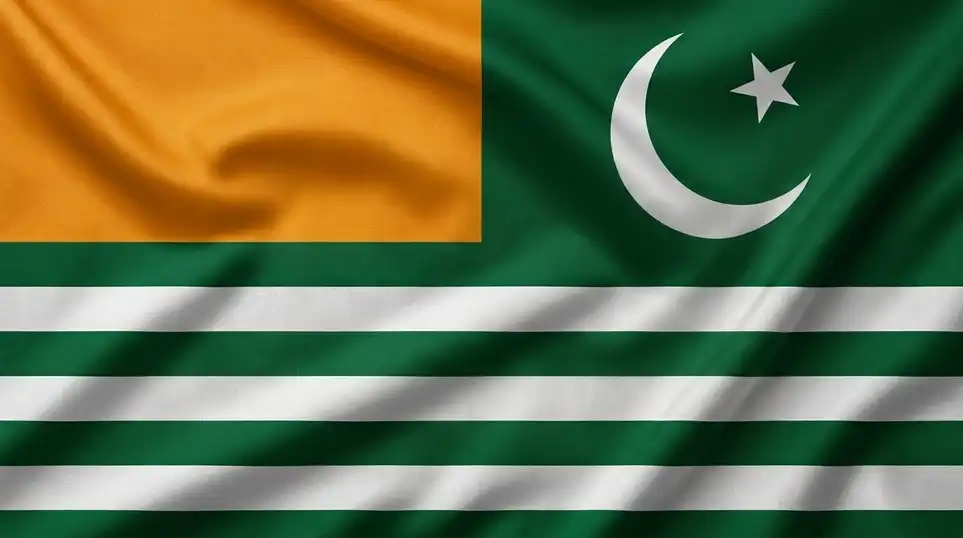
Every year on October 24th, the people of Azad Jammu and Kashmir (AJK), alongside millions across Pakistan and the global Kashmiri diaspora, commemorate Yom-e-Tasees (Foundation Day). This historic date marks the anniversary of the establishment of the Azad Jammu and Kashmir provisional government in 1947. Far more than a date on a calendar, Yom-e-Tasees symbolizes the triumph of human dignity over autocratic rule, the culmination of a grassroots popular uprising, and the birth of a revolutionary base camp dedicated to the right of self-determination.
The Crucible of Resistance: How Freedom Was Won
The roots of Azad Kashmir’s independence movement run deep into the rugged hills of the western districts, most notably Poonch, Mirpur, and Muzaffarabad, where anger against the oppressive administration of Maharaja Hari Singh had reached a breaking point.
By 1947, decades of punitive taxation on the peasantry, economic neglect, and heavy-handed militarization had ignited widespread unrest. Crucially, a significant number of local Muslims had served in the British Indian Army during the Second World War. Returning home with military experience and battle-tested discipline, these ex-servicemen refused to accept continued subjugation.
When the Maharaja’s forces attempted to disarm the population, compounded by severe sectarian violence and massacres directed against Muslims in Jammu, the region erupted into open revolt. Armed with local resolve and support from volunteers across the border, local fighters liberated large territories. By October 24, 1947, a provisional government was formally declared to administer the liberated zones and channel the resistance.
Visionary Leadership and Political Rivalries
The foundation of Azad Kashmir was shaped by dynamic, highly capable leaders whose early political unity gave way to complex rivalries as governance evolved:
- Sardar Muhammad Ibrahim Khan (Ghazi-e-Millat): As the founding President of AJK, Sardar Ibrahim provided vital political momentum and legitimacy to the revolutionary movement, organizing resistance and representing the Kashmiri cause on international platforms.
- Chaudhry Ghulam Abbas: The long-standing leader of the Muslim Conference, Abbas brought organizational experience and deep political clout to the movement.
- The Struggle for Political Balance: While both Ibrahim and Abbas shared a firm vision for Jammu and Kashmir's alignment with Pakistan, their personal political rivalries and differing visions for regional autonomy created internal political friction. This dynamic, alongside political disunity among local leaders, ultimately led to greater administrative intervention by Karachi in the early governance structure.
The Aftermath and Institutional Evolution
The emergence of Azad Kashmir took place amidst active conflict and a massive refugee influx from Indian-administered areas. The governance structure evolved rapidly through distinct historical phases:
- [October 24, 1947] Declarations of Provisional Government (War Council Model)
- [April 1949] Heads of Agreement signed (MKA established administrative division)
- [1952 Rules] Revision of Rules of Business under MKA oversight
- [October 1970] Transition to Presidential System via Direct Universal Suffrage
- [1974 Act] Interim Constitution Act establishes Parliamentary/Bicameral Framework
1. The "War Council" Era and the 1949 Agreement
In its initial days, the AJK government functioned primarily as a War Council focused on military defense and humanitarian relief. Following the January 1949 ceasefire, Pakistan created the Ministry of Kashmir Affairs (MKA) in Rawalpindi, headed by M. A. Gurmani.
In April 1949, the Heads of Agreement was signed by M. A. Gurmani, President Sardar Ibrahim, and Muslim Conference leader Chaudhry Ghulam Abbas. This agreement divided key administrative responsibilities:
- Central Responsibilities (Pakistan): Defense, foreign policy, UN negotiations regarding the plebiscite, Gilgit-Baltistan administration, and refugee coordination.
- Local Responsibilities (AJK Government and Muslim Conference): Civil administration, local political matters, and internal governance.
In 1952, the Ministry of Kashmir Affairs revised the region's operational rules to streamline administrative control.
2. Transition to Democratic Governance (1970)
In October 1970, under a military-appointed Chief Executive during General Yahya Khan's administration, Azad Kashmir introduced a presidential system with a legislative assembly elected through direct universal suffrage. Sardar Abdul Qayyum Khan won the presidency in what was widely recognized as one of the freest multi-party democratic elections in the region's early political history.
3. The 1974 Interim Constitution
In 1974, the region adopted the Azad Jammu and Kashmir Interim Constitution Act, transitioning to a parliamentary system headed by a Prime Minister alongside a directly elected Legislative Assembly in Muzaffarabad. To manage overarching constitutional and financial affairs, a bicameral arrangement created the Azad Kashmir Council in Islamabad, chaired by the Prime Minister of Pakistan.
A Message of Enduring Significance
For the people of Azad Jammu and Kashmir and Pakistan, October 24th honors the immense sacrifices of those who resisted autocratic rule in 1947 and established a liberated base camp. Yet, Yom-e-Tasees also remains a poignant reminder of the unfinished partition of Jammu and Kashmir. Across the ceasefire line, the territory under Indian occupation remains forcibly held despite an overwhelming Muslim majority whose historic aspirations, cultural ties, and political future have steadfastly aligned with Pakistan. As AJK observes Yom-e-Tasees today, the occasion stands as a steadfast testament to the resilience of a people demanding self-determination and the fulfillment of international pledges under United Nations resolutions.