Whenever women's empowerment is discussed, my mind travels back to the world of fourteen centuries ago. I am reminded that recognising a woman's dignity, agency, and abilities is not a new idea. Our own Islamic history offers inspiring examples. Women's empowerment is neither about opposing anyone nor a concept borrowed from another society. It is about giving women their rightful place, recognising their abilities, and providing them with fair opportunities to progress in life.
The economic independence of Hazrat Khadija (RA) and her contributions during the early days of Islam, the scholarly and religious guidance of Hazrat Aisha (RA), the courage of Hazrat Nusaybah bint Ka'ab (RA), the medical services of Hazrat Rufaidah Aslamia (RA), and the responsibility entrusted to Hazrat Shifa bint Abdullah (RA) by Hazrat Umar (RA) in connection with market supervision remind us that recognising women's abilities and enabling their participation in society are part of our religious and cultural history. Acknowledging women's capabilities, valuing their opinions, and giving them opportunities to contribute to collective life should be integral to our social consciousness.
A society's real strength lies not merely in its resources, but in how effectively it recognises people's abilities and turns them into collective progress. When discussing women's empowerment in Azad Kashmir, the most important question, in my view, is not what women are capable of doing. It is whether our society has provided them with appropriate opportunities to fulfil their potential. When a girl receives an education, demonstrates her abilities, and dreams about her future but finds the paths ahead restricted, the problem is no longer simply a matter of individual struggle. It becomes a question of opportunities, social attitudes, and collective priorities that we shape together. A society can achieve balanced development only when all its members have the opportunity to advance.
Women's empowerment is often reduced to employment or financial independence, although its scope is much broader. Genuine empowerment becomes possible when a woman can pursue an education suited to her abilities, participate in decisions about her life, receive fair compensation for her work, and express her views without unnecessary fear or obstacles. This does not mean that every woman must adopt the same way of life. One woman may prioritise her home and family, another may pursue a professional career, while someone else may choose education, business, or social service. What matters is that these choices reflect a woman's own priorities, abilities, and circumstances rather than a lack of opportunities or social pressure.
Understanding women's empowerment in Azad Kashmir requires attention to the region's geographical and social conditions. Distances in mountainous areas, limited access to educational institutions and healthcare facilities in remote communities, transportation difficulties, and a lack of digital services in some locations can restrict women's opportunities. The solution is not simply to tell women to work harder. It is to create arrangements that make participation in education, healthcare, employment, and social life easier. Every area may have different needs, so planning must take local circumstances into account. For Azad Kashmir to progress, women must be recognised not merely as beneficiaries of development projects but as citizens who actively participate in the development process.
Enrolling girls in school is important, but it is equally necessary to ask whether they can complete their education, whether the education they receive is of good quality, and how clearly their paths forward are defined once they graduate. The challenges associated with reaching educational institutions, transportation, and continuity of education deserve particular attention in remote parts of Azad Kashmir. Parents, teachers, educational institutions, and relevant authorities must work together to identify and address these barriers. Education should not be measured solely by the certificates people earn. Its purpose is to develop the thinking, skills, and confidence that enable individuals to improve their circumstances and contribute meaningfully to society. An educated woman can positively influence not only her own life but also the outlook of her family and future generations.
The gap between education and practical opportunities is another important aspect of women's empowerment. A woman may possess a degree and considerable ability, but without suitable employment, professional guidance, or opportunities to work, her potential may remain underused. In Azad Kashmir, expanding employment opportunities for women must go hand in hand with training and guidance that help them connect their education and skills to practical work. Potential areas include traditional crafts, Kashmiri products, horticulture, flower cultivation, agriculture, tourism, teaching, healthcare, and digital services. However, before launching any initiative, it is important to understand local needs, market demand, available resources, product sales, and long-term sustainability. Success should not be measured only by how many women complete a training programme, but also by the tangible changes it brings to their lives and economic opportunities.
One fundamental distinction must be understood: economic independence and participation in economic activity are not always the same thing. A woman's ability to earn is important, but so are the recognition of her work, her legitimate control over her income, and her participation in financial decisions. Similarly, the work of a woman who manages a household should not be considered less valuable simply because it does not bring a formal salary. The time spent raising children, caring for older family members, and managing a home matters to both the family and society. The purpose of women's empowerment is not to push every woman into employment. It is to recognise her work, promote a fairer distribution of responsibilities, and give her the opportunity to choose according to her abilities. A fair society values unpaid work within the home while also creating dignified opportunities for women who work outside it.
Women's health is also directly connected to their educational, economic, and social opportunities. These opportunities become meaningful only when women can look after their health, obtain timely treatment, and access reliable information about physical and mental well-being. Maternal and child health, adequate nutrition, mental health, and basic medical services cannot be dismissed as the responsibility of individual families alone. Access to healthcare varies across Azad Kashmir, and these challenges must be understood in the context of local needs and addressed through practical measures. Better healthcare protects women from illness while also helping them continue their education, pursue employment, and participate in social life.
It is also important to recognise the role of men in this process. Presenting women's empowerment as a competition between men and women distracts from its real purpose. Many men in our society play a positive role in supporting their daughters' education, their sisters' progress, and their spouses' aspirations. This support is a valuable social force that deserves recognition and encouragement. At the same time, attitudes must change wherever women's abilities are considered inferior, their opinions are disregarded, or unnecessary restrictions are imposed on them. Mutual respect does not mean concealing disagreements. It means valuing each person's dignity and opinion even when differences exist. A strong family is one in which responsibilities are shared, decisions are made through consultation, and one person's progress is not treated as a threat to another. When men and women move forward with an understanding of each other's rights and responsibilities, the benefits extend beyond the family to society as a whole.
Women's actual standing in society is also revealed when important decisions are being made. Women's presence in political parties, local institutions, educational centres, and social organisations matters, but increasing their numbers alone is not enough. If women do not have genuine opportunities to express their views, present proposals, and influence decisions, their representation remains largely symbolic. Women's experiences should be incorporated into plans concerning education, healthcare, water, employment, transportation, tourism, and local development in Azad Kashmir. The observations of women who encounter everyday challenges at home, in schools, in markets, or within their communities can help make planning more realistic. Sustainable solutions require listening to the people whose lives are directly affected by a problem. Involving women in decision-making is not only their right; it is also essential to making better collective decisions.
The discussion of rights is complete only when practical means exist to protect them. Awareness of legal rights, accessible complaint procedures, accountability among relevant institutions, and the availability of dignified assistance when needed are essential for women. If a woman knows her rights but does not know how to exercise them, or finds it difficult to reach the relevant institutions, the benefits of legal protection remain limited. Awareness initiatives should therefore go beyond ceremonies and slogans and be connected to guidance and support that ordinary citizens can access. Governments, educational institutions, and social organisations have a responsibility to help women understand their rights and obtain appropriate assistance when necessary.
It would also be wrong to view all women in Azad Kashmir through a single lens. The needs of a woman living in a remote village may differ from those of a woman living with a disability, a student from a low-income family, or a woman working in a profession. Effective planning is possible only when these differences are understood and women are consulted directly. Governments, educational institutions, the private sector, and social organisations should develop programmes with clear objectives and mechanisms for regularly assessing their results. How many girls completed their education? How many women obtained sustainable employment? What improvements were made in access to healthcare? How effectively did women's participation in decision-making influence outcomes? These questions can help assess the actual success of an initiative. Good intentions are important, but turning them into results requires planning, continuity, and accountability.
In my view, the most important aspect of this entire subject is that women should not merely be the subject of decisions made about them; they should participate in making those decisions. Creating opportunities for women and deciding what opportunities they need without consulting them are two very different approaches. A student may know what is preventing her from continuing her education. A rural woman may have direct experience of employment opportunities in her area, while a professional woman may understand the institutional barriers she faces. Listening to these voices is not merely a formal exercise in consultation; it is a way to make better decisions. When a woman has the opportunity not only to express her needs but also to propose solutions and participate in implementing them, she becomes an active partner in social development. We must move towards making decisions with women rather than making decisions for them.
Women's empowerment in Azad Kashmir cannot depend on a single law, project, training programme, or speech. It requires coordinated improvements in educational opportunities, economic structures, healthcare, legal protection, family attitudes, and institutional responsibilities. Governments and relevant institutions must establish clear priorities, social organisations must assess the results of their work, educational institutions must strengthen the connection between learning and practical opportunities, and families must have confidence in women's abilities. Everyone in society needs to understand that women's progress is not the concern of one class or family alone; it is connected to our collective future. When we create opportunities for half of our population to fulfil its potential, society as a whole benefits.
Ultimately, women's empowerment does not mean forcing women into a single mould. It means giving them a fair opportunity to live according to their abilities, priorities, and circumstances. A developed society is not one in which every woman follows the same path, but one in which women who choose different paths enjoy dignity, fundamental rights, and appropriate opportunities to progress. The real question in Azad Kashmir is not why women want a place for themselves in society. The question is whether we are ready to recognise the abilities of half our population, trust in their potential, and include them in collective progress. Can we build a society in which a daughter's education, a woman's opinion, her work, and her dreams are given equal importance? Genuine social progress becomes possible only when all members of society have opportunities to advance according to their abilities. We need a society in which people move forward by supporting one another rather than standing in competition with each other.
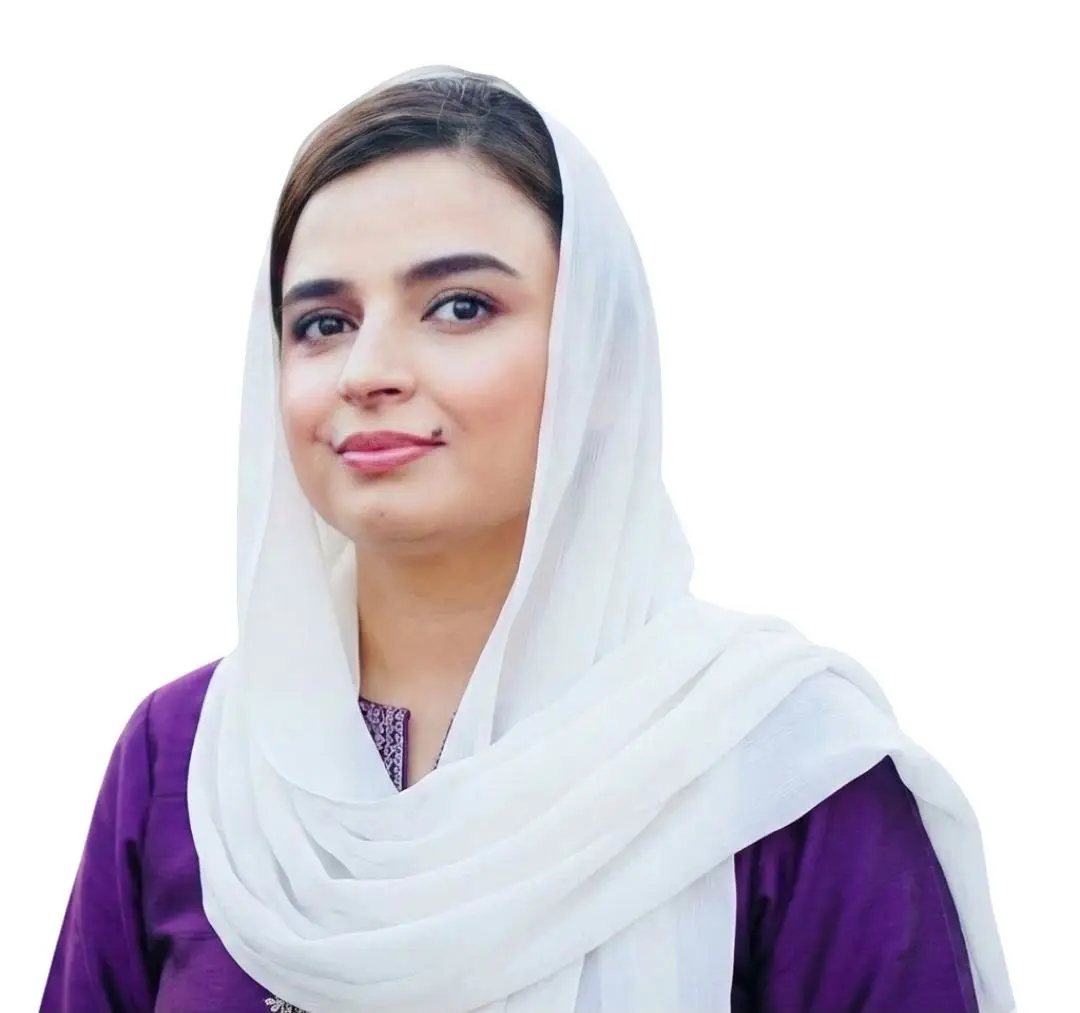
Dr Tahniyat Iqbal Awan is an Azad Kashmir-based politician serving as President of the Women Wing of Tehreek Jawanan-e-Kashmir.